A jaw-dropping fact abusement parks like SeaWorld would rather you didn’t know: There’s not a single recorded instance of an orca attacking and killing a human in the ocean. Unlike at marine parks—where frustrated orcas have been involved in multiple human deaths—these complex animals have been known to show gentle curiosity toward humans in nature. A new study reveals that free orcas have possibly tried to connect with humans by offering them fish—an extraordinary gesture that speaks to their deep intelligence, social awareness, and the cruelty of keeping them trapped in tiny tanks.
Do Orcas Want to Interact With Humans?
This new study notes that while food-sharing gestures have been seen in companion animals like cats, this is the first time similar interactions have been recorded and studied in free-roaming predators.
 © iStock.com/sethakan
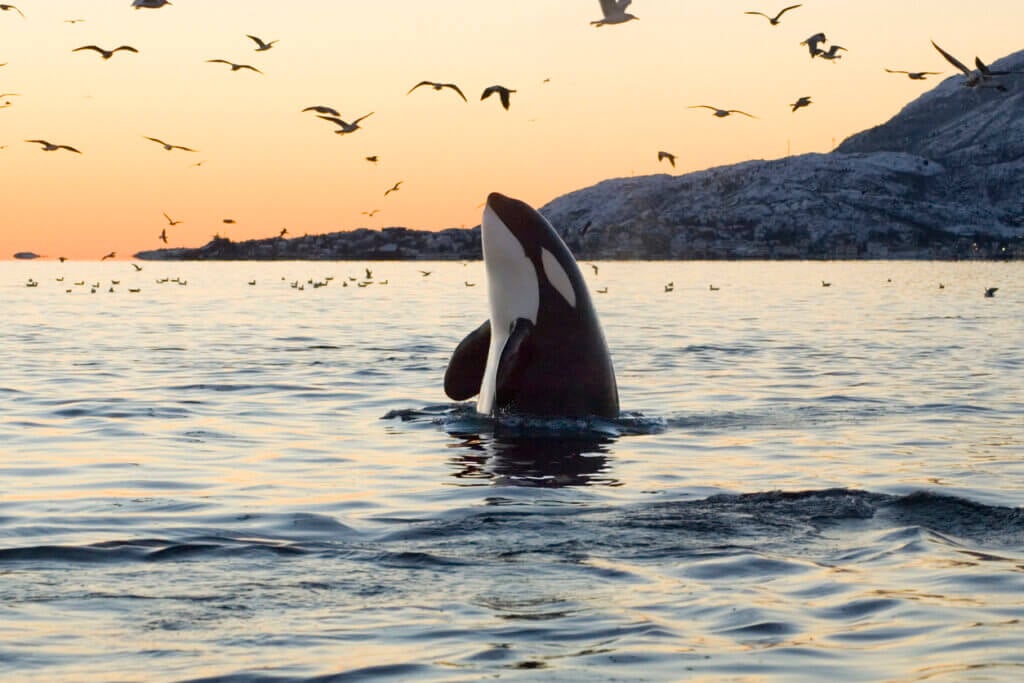
Researchers analyzed 34 documented instances over the past 20 years, across various parts of the world, in which orcas approached humans and presented them with offerings. In many of these cases, the orcas appeared to wait for a human response, and in some, they even re-offered the fish after they were initially declined, demonstrating a remarkable level of persistence. Experts suggest that these behaviors could be a way for orcas to build connections or explore interactions with humans.
Orcas offering fish to humans suggests that, in nature, these animals may even be altruistic toward humans. This may be because free orcas can explore interspecies interactions on their terms, not because they are forced to.
Why Have Orcas Attacked Humans at Marine Parks?
In their ocean homes, orcas live in close-knit family groups and are free to explore the vast open sea, traveling up to 150 miles a day. Around the world, they have unique populations known as “ecotypes.” Each ecotype has its own distinct diet, hunting strategies, vocal dialects, and social structures—proof of just how culturally rich and behaviorally diverse these animals are.
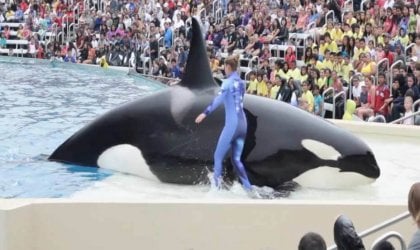
At SeaWorld and other marine parks, orcas’ lives consist of barren pools and concrete walls. When they aren’t swimming in endless circles in tiny tanks, humans force them to perform tricks to sell tickets. Marine parks often house orcas without another orca or with incompatible tankmates, depriving these highly social animals of the chance to develop meaningful relationships.
This constant confinement, deprivation, and exploitation naturally leads to psychological distress, frustration, and, in many cases, aggression. Marine parks have seen multiple incidents of orcas attacking trainers and even each other. In one infamous incident that became the center of the groundbreaking documentary Blackfish, an orca named Tilikum attacked and killed trainer Dawn Brancheau during a “Dine with Shamu” show. Orcas at SeaWorld have also suffered serious injuries because of tankmate aggression. None of these events are random—they’re the predictable result of condemning these emotional, intelligent animals to a lifetime of imprisonment and abuse.
The Bottom Line: It’s Time to Empty the Tanks
This new study is another powerful reminder that orcas don’t belong in tanks. Facilities like SeaWorld have torn orcas from their families and deprive them of everything that makes their lives meaningful. It needs to end.
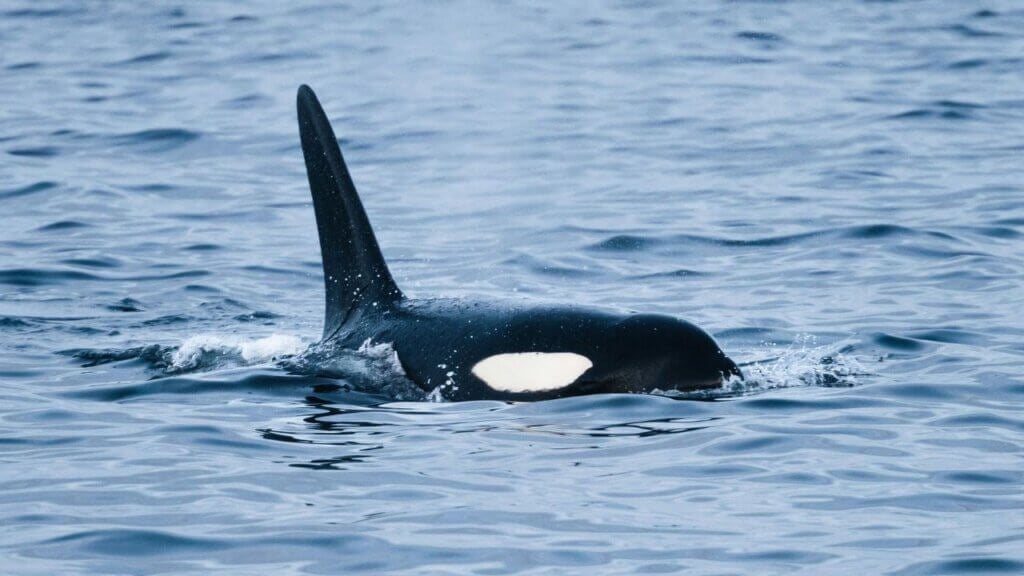
No animal wants to spend their life trapped in a tiny tank. Seventeen orcas are currently imprisoned at SeaWorld parks, and the company is still using other dolphins and whales as breeding machines to create more generations of animals to exploit.
Please urge SeaWorld to establish a firm and rapid plan to end its use of animals, stop breeding all dolphins and whales, and relocate them to seaside sanctuaries where they could finally live free of exploitation: