At SeaWorld parks across the U.S., 16 orcas remain imprisoned in concrete tanks. As of September 2025, SeaWorld San Antonio has four orcas. The orcas at SeaWorld San Antonio theme park were all born in captivity.
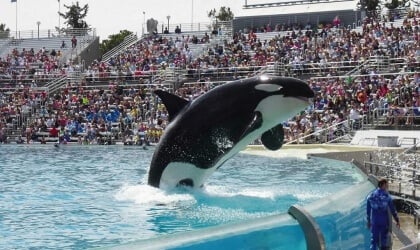
Some of the orcas have spent their entire lives imprisoned at the Texas amusement park, while others were transferred from other parks. SeaWorld San Antonio uses the orcas in its Orca Encounter show and in its Dine with Orcas experience, in which people eat a meal as the orcas are made to perform in a tiny tank in exchange for dead fish.
Get to know the last orca prisoners at SeaWorld San Antonio and find out what you can do to help them.
Orcas Currently at SeaWorld San Antonio
Takara
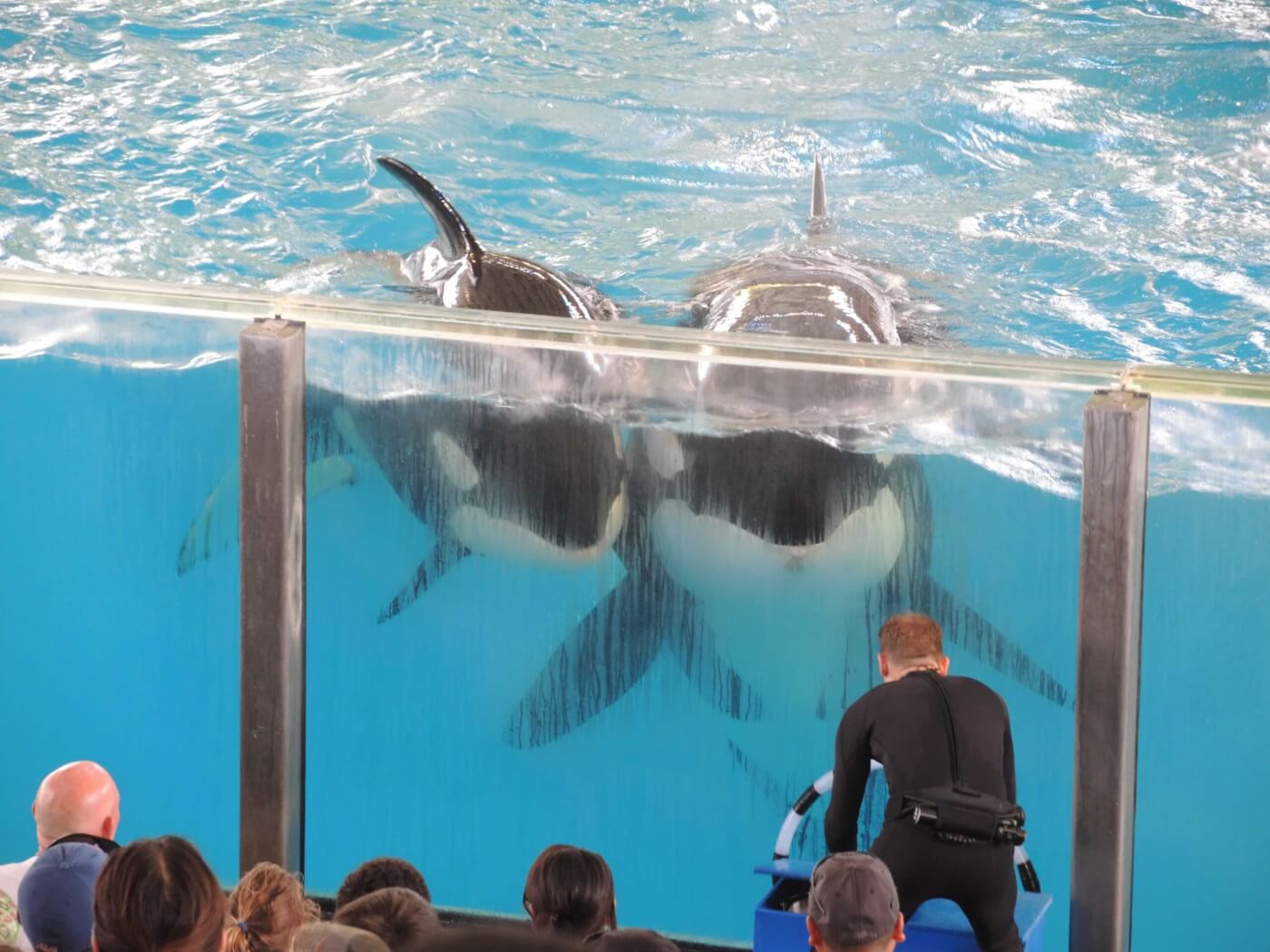
Takara was born captive in 1991. SeaWorld used her as a breeding machine, and she is the last orca to give birth at any SeaWorld park. She has given birth to five calves.
Three of her babies are now dead. Her last calf, Kyara, died at just 3 months old, Kohana died in 2022 at Loro Parque in Spain, and her daughter, Kamea, died in 2025.
Takara’s surviving babies, Sakari and Trua, are still imprisoned at SeaWorld parks. Sakari lives at SeaWorld San Antonio, while Trua lives at SeaWorld Orlando.
Kyuquot
Kyuquot was also born captive in 1991. Weighing more than 9,000 pounds, Kyuquot is the largest orca imprisoned at SeaWorld San Antonio. In the ocean, orcas swim up to 150 miles a day—it would take Kyuquot more than 4,280 laps around his tank in San Antonio to swim the same distance.
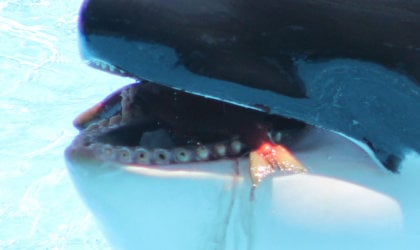
The cramped tanks Kyuquot and the other orcas live in at SeaWorld San Antonio deprive them of everything essential to their physical and mental health. The conditions of these miserable, desolate tanks cause them stress, and that stress sometimes causes them to snap.
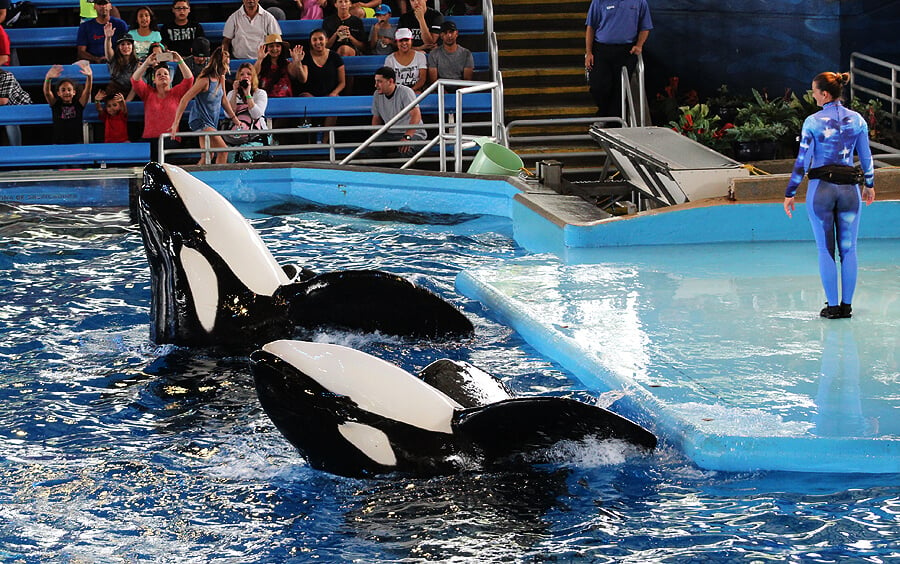
Kyuquot has been involved in numerous incidents involving trainers, the most notable of which was his July 2004 attack on SeaWorld trainer Steve Aibel. Kyuquot body-slammed Aibel multiple times—dunking the trainer and swimming over him, blocking every attempt at an exit he tried to make.
Tuar
Tuar was born captive in 1999 and is the son of Kalina and Tilikum. Like his older half-brother, Keet, Tuar was separated from his mother when he was just a few years old. He was transferred to SeaWorld San Antonio in 2004 and has remained there since.
Sakari
Sakari was born in captivity in 2010 and is the daughter of Takara and Tilikum. Takara was transferred to San Antonio while pregnant with Sakari, so Sakari never had the chance to meet her father. Sakari has spent her whole life at SeaWorld San Antonio.
Some of the Orcas Previously at SeaWorld San Antonio
Kayla was born at SeaWorld San Antonio in 1988, taken from her mother at only 11 months of age, shipped to the now-defunct SeaWorld Ohio at the age of 2, returned to San Antonio in 1999, and finally moved to Orlando in 2006, where she died in 2019.
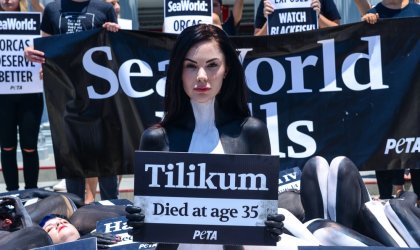
Keto was born at SeaWorld Orlando in 1995 as a result of the company’s sordid orca breeding program—an operation that has since ended following a vigorous PETA campaign. His mother, Kalina, was the first orca to survive after being born at a SeaWorld park—all of the previous captive-bred babies were either stillborn or died within the first two months of life. Keto’s father, Kotar, died at SeaWorld when a tank gate came down and crushed his skull. In 1999, SeaWorld separated the four-year-old Keto from his mother and transferred him to SeaWorld San Diego. Soon after, the company sent him to SeaWorld Ohio, followed by SeaWorld San Antonio. In 2006, SeaWorld “loaned” Keto and three other young orcas to Loro Parque in Spain. SeaWorld was heavily involved in “managing” the orcas at Loro Parque, including overseeing their care and training—until it tried to distance itself after Keto killed trainer Alexis Martinez in 2009 during a session that a SeaWorld senior trainer was reportedly supervising. Keto died in 2024.
Kamea was born at the San Antonio park in 2013. Her mother is Takara and her father is Kshamenk. Kshamenk is the last orca trapped at Mundo Marino in Argentina, where he has nothing to do but float listlessly or swim in endless circles. Kamea spent her entire life at SeaWorld San Antonio and was the youngest orca at any of SeaWorld’s facilities when she died in 2025.
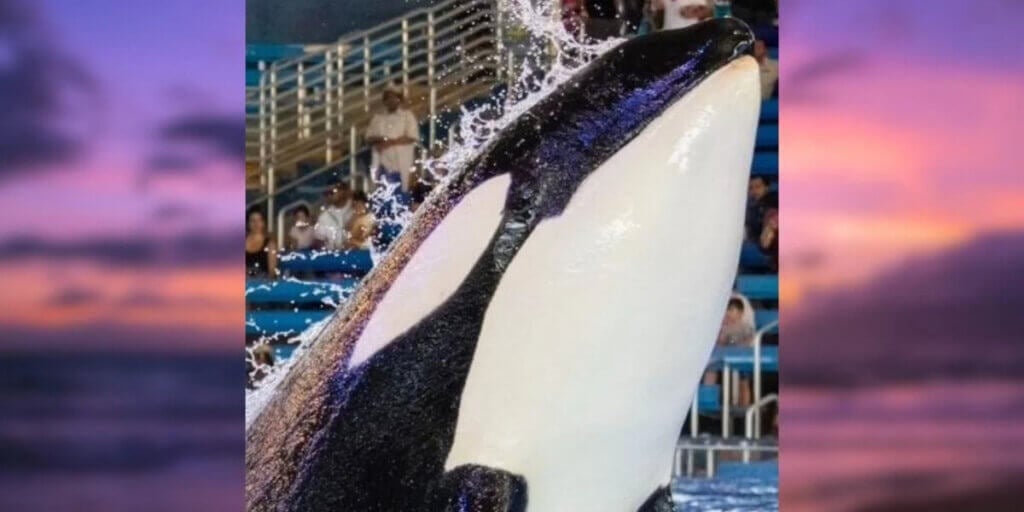
Kyara was born at SeaWorld San Antonio in 2017. Her parents were Takara and Kyuquot. She died at just three months old after reportedly not receiving adequate daily nutrition and having suffered with pneumonia. Kyara was the 40th orca to die on SeaWorld’s watch.
Help the Orcas at SeaWorld San Antonio
Every SeaWorld ticket sale contributes directly to the suffering of these complex, emotional animals. Help Takara and the other orcas in San Antonio by never visiting SeaWorld or any other marine park that holds orcas captive.
Join PETA in urging SeaWorld to send orcas, including Corky—the longest-held captive orca in history—to seaside sanctuaries, where they could enjoy some semblance of the natural life abusement parks have denied them for so long.